
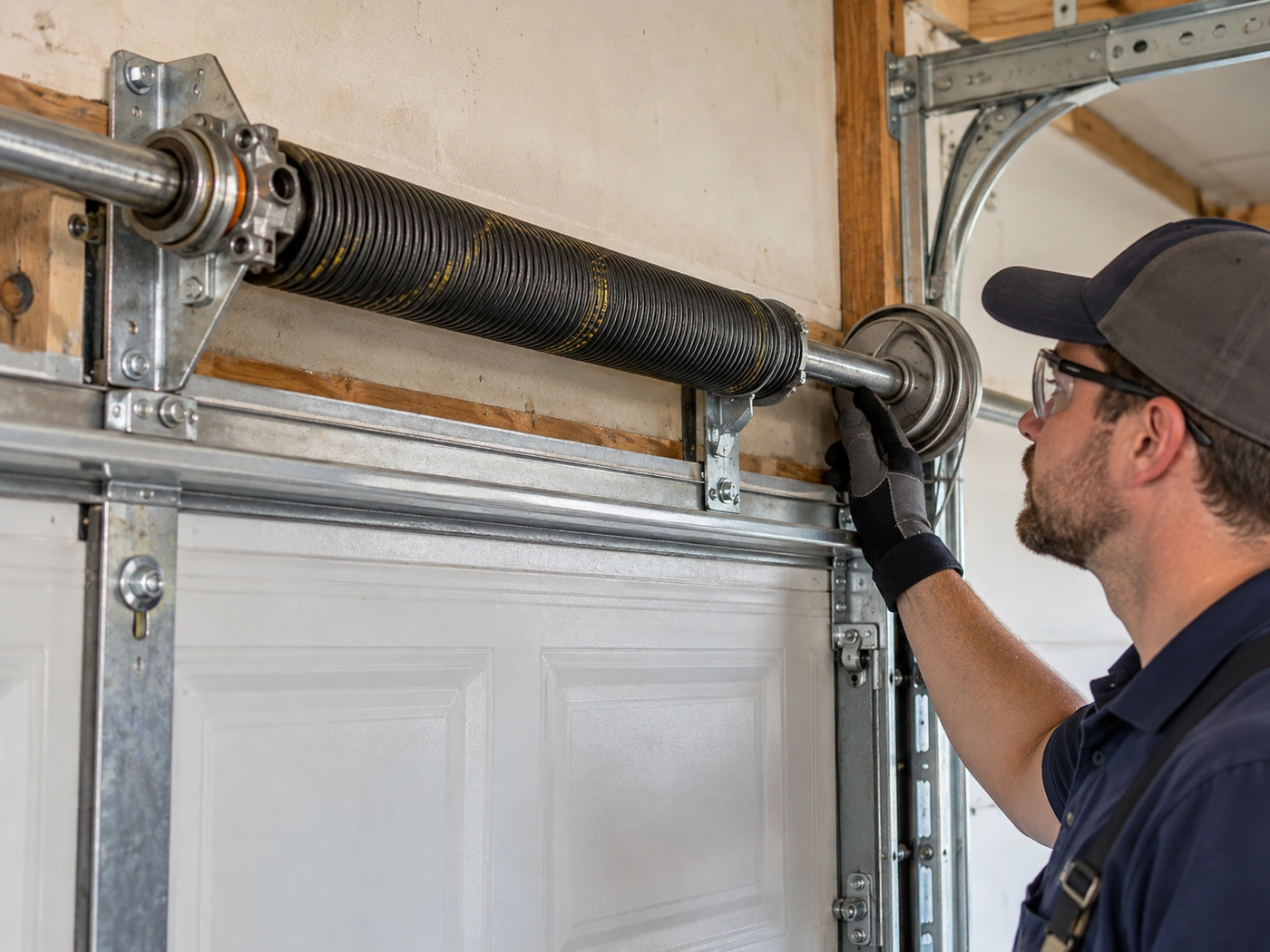
Garage door springs counterbalance much of the door weight. When a spring breaks or loses performance, the door may become extremely heavy, uneven, difficult to lift, or unable to operate normally.
Signs Of A Spring Problem
A visible spring gap, a loud snap from the garage, a door that feels unusually heavy, a door that lifts only a short distance, or cables that appear loose can indicate a spring-system problem.
Why Proper Matching Matters
Spring systems should be matched to the door and configured for balanced operation. Incorrect spring selection or adjustment can increase strain on the opener and other moving hardware.
Safety Around Stored Energy
Garage door springs and related hardware are under significant tension. Diagnosis and service should be performed with the proper tools, procedures and attention to the complete lift system.
Frequently Asked Questions
How do I know if a torsion spring broke?
A visible gap in the spring, a loud snap, or a door that suddenly feels very heavy are common signs.
Can I open the door with a broken spring?
A broken spring can make the door very heavy and difficult to control. Avoid forcing operation and arrange service.
Why are garage door springs dangerous?
They store significant mechanical energy. Improper handling can cause serious injury or property damage.
Does spring size matter?
Yes. Spring selection and setup must match the door so the system can balance correctly.
Will spring problems affect the opener?
Yes. An unbalanced or very heavy door can place excessive strain on the opener and other components.